Trust by Design at B2B Blockchain Marketplace
Blockchain, Trading, Trust, and Cannabinoids; it sounds like the beginning of a bad joke or the setup for something genuinely new?
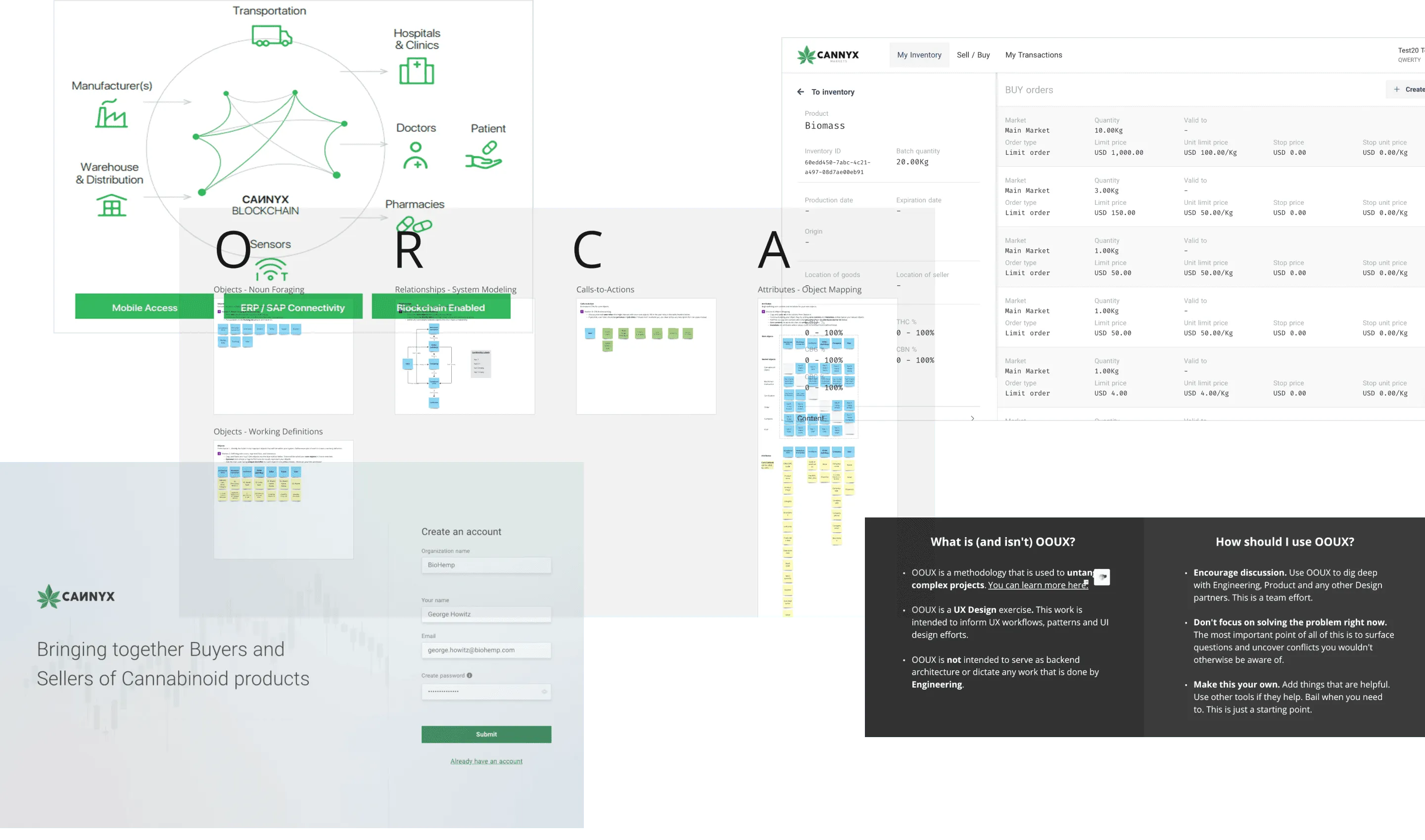
Brought in as the sole product designer on a fully remote team, the challenge was to craft a tamper-proof, easily auditable marketplace, in a regulated industry, where investors were the first customers.
The goal? Balancing trust, usability, and the immutability of blockchain without slowing down the fast-moving nature of trade.
Discovery
Blockchain was an intriguing topic. I heard the word here and there, especially in the context of Bitcoin. But for this project understanding blockchain’s terminology, principles, and real-world applications was critical to shaping a product delivering value.
To align seamlessly with developers, the first step was defining the blockchain solution’s requirements and its database structure. With a clear understanding of who the users were, we involved them in task analysis and interviews. That allowed us to understand the details of how selling, buying, and tracking cannabinoids to the end customers worked to get the job done.
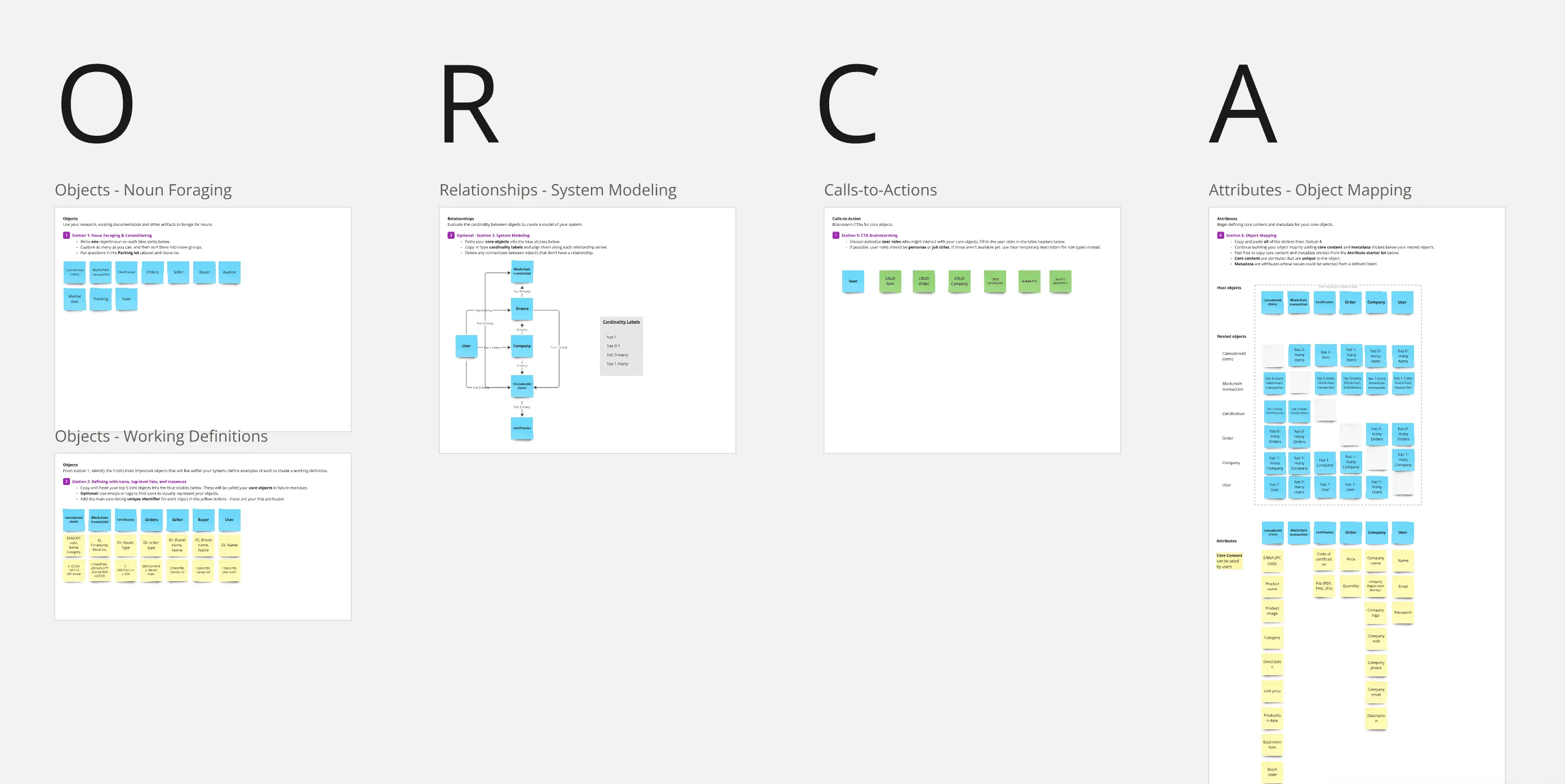
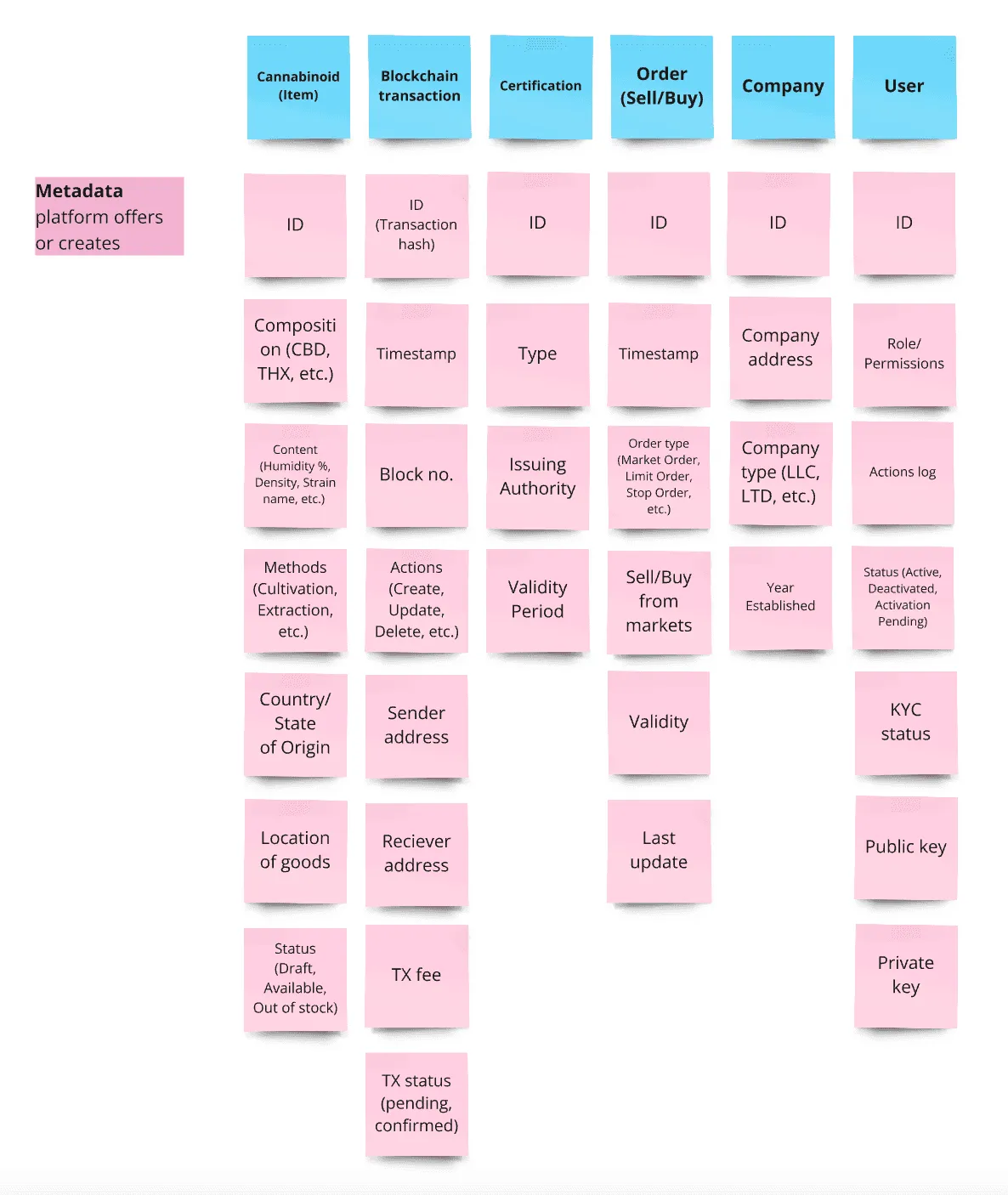
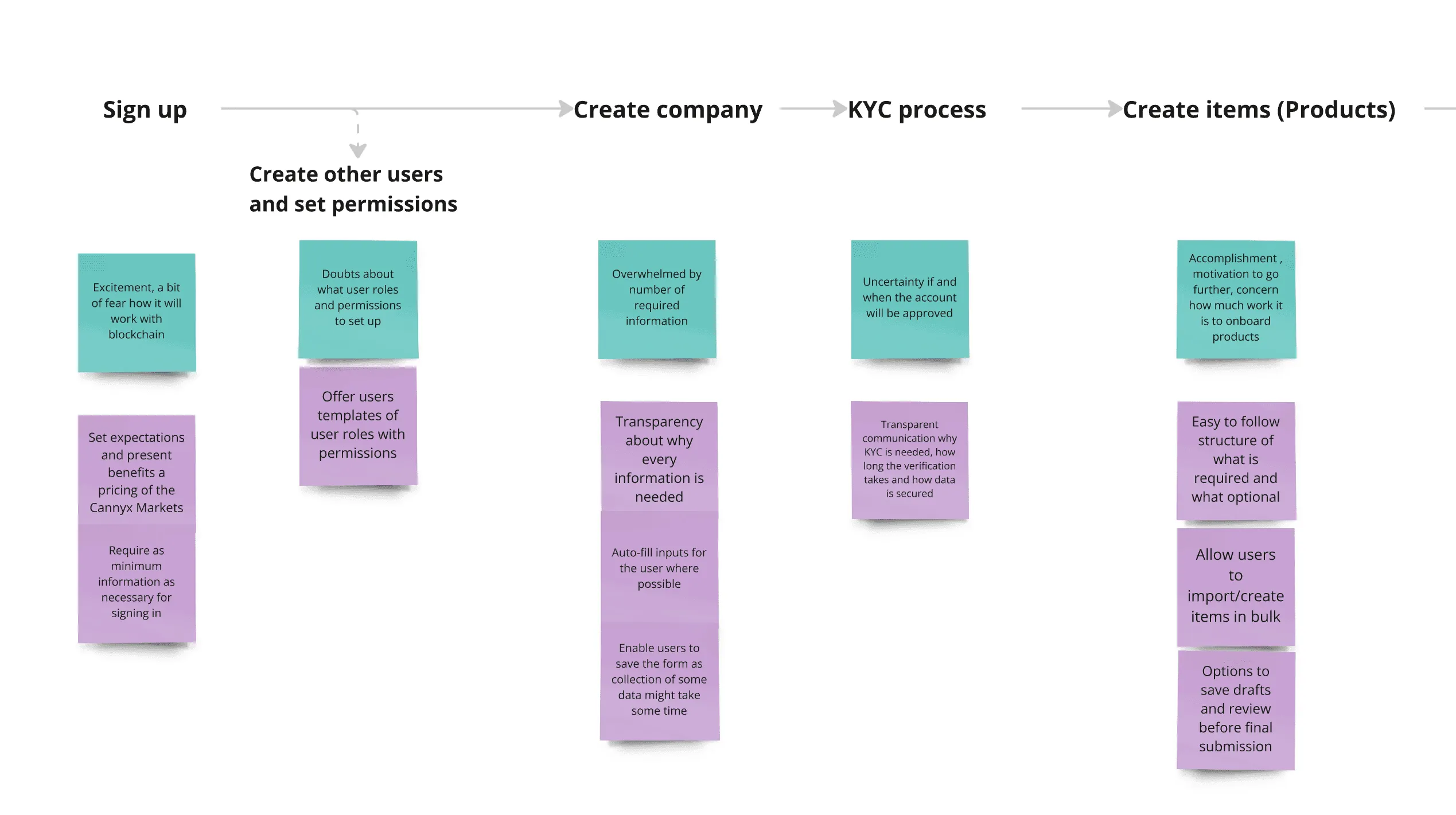
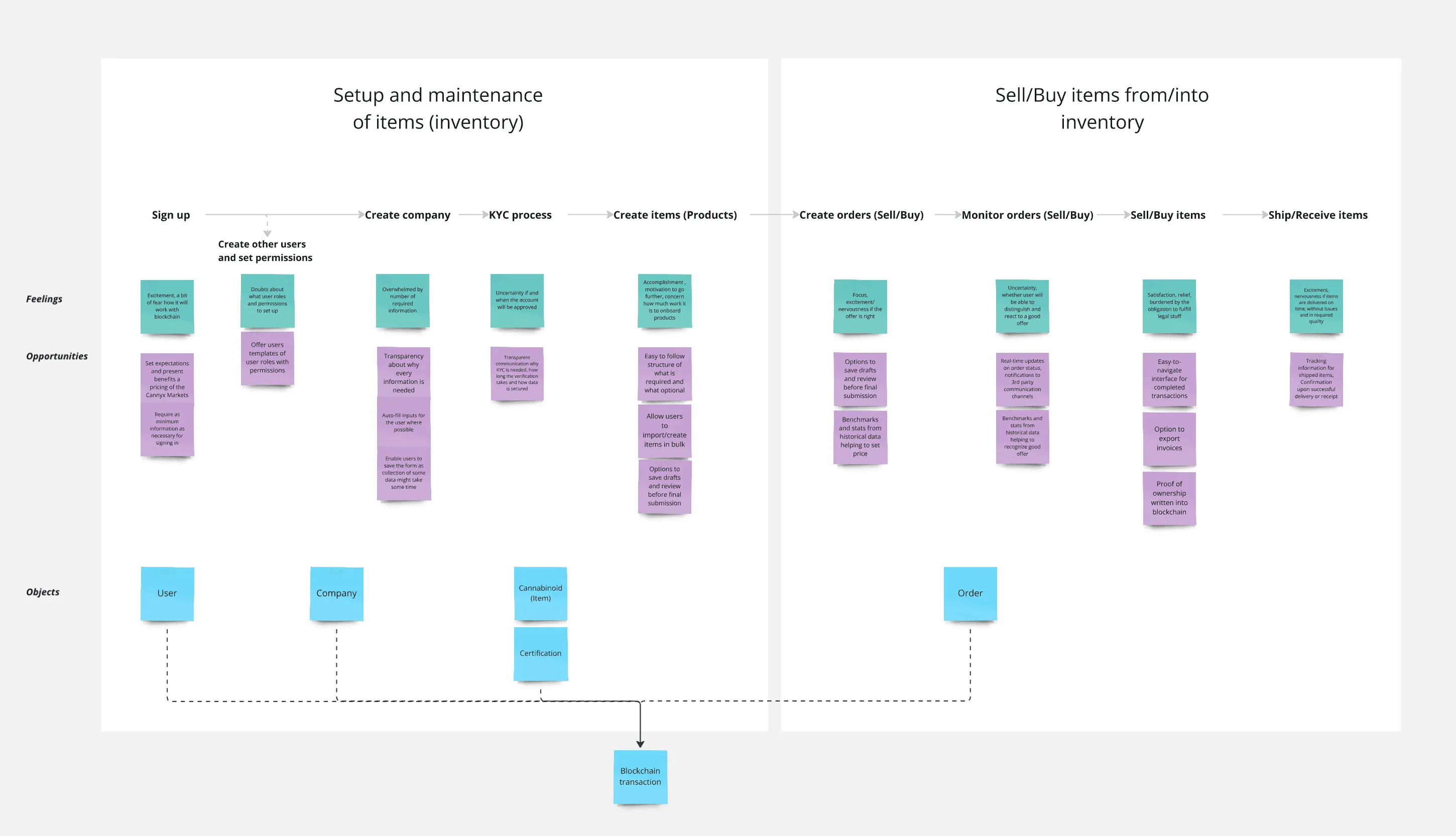
The collected details about tasks showed their complexity: the right job for the ORCA framework, a part of Object-Oriented UX (OOUX). By breaking the system into Objects, their Attributes, and Calls-to-Action, it became easier to understand relationships between key entities and highly increase a chance of a consistent, scalable design.
I learned that it was essential for users to be compliant with the regulations of the cannabinoids market in the USA and EU. These included ensuring KYC (know your customer), product quality, and safety standards, such as testing for contaminants, proper labeling of cannabinoid content, and certifications.
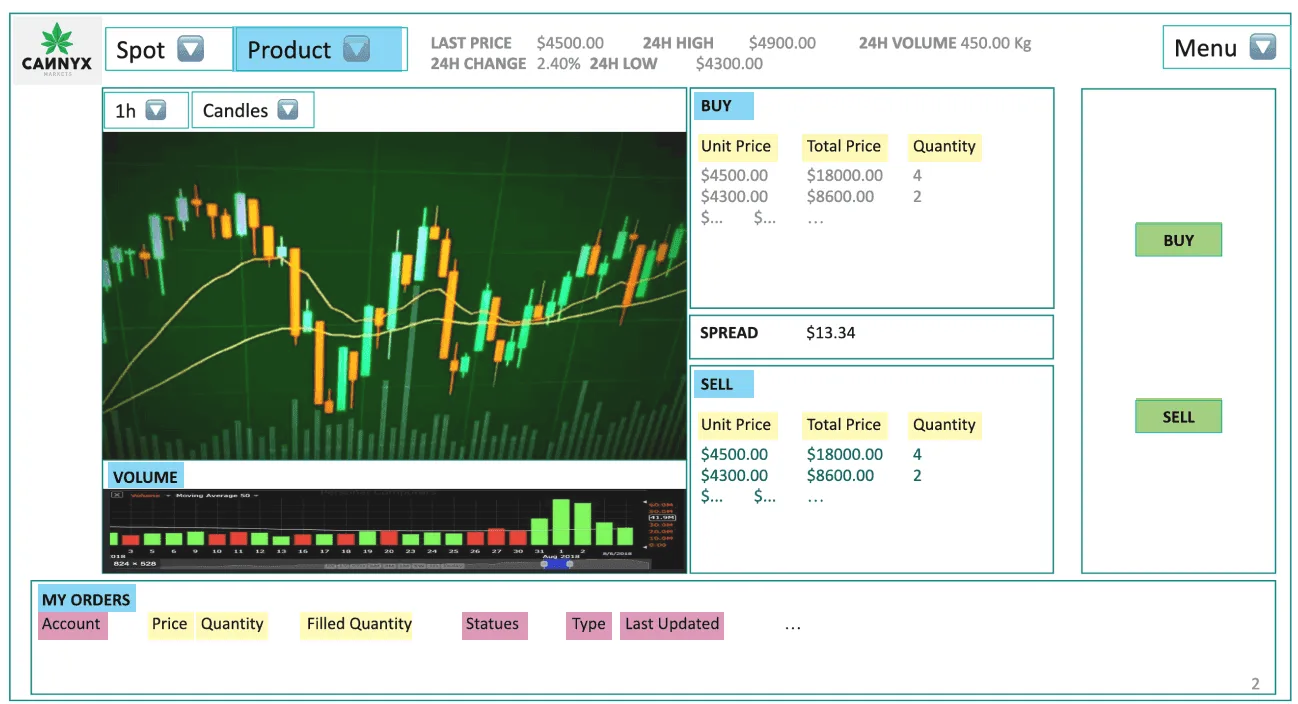
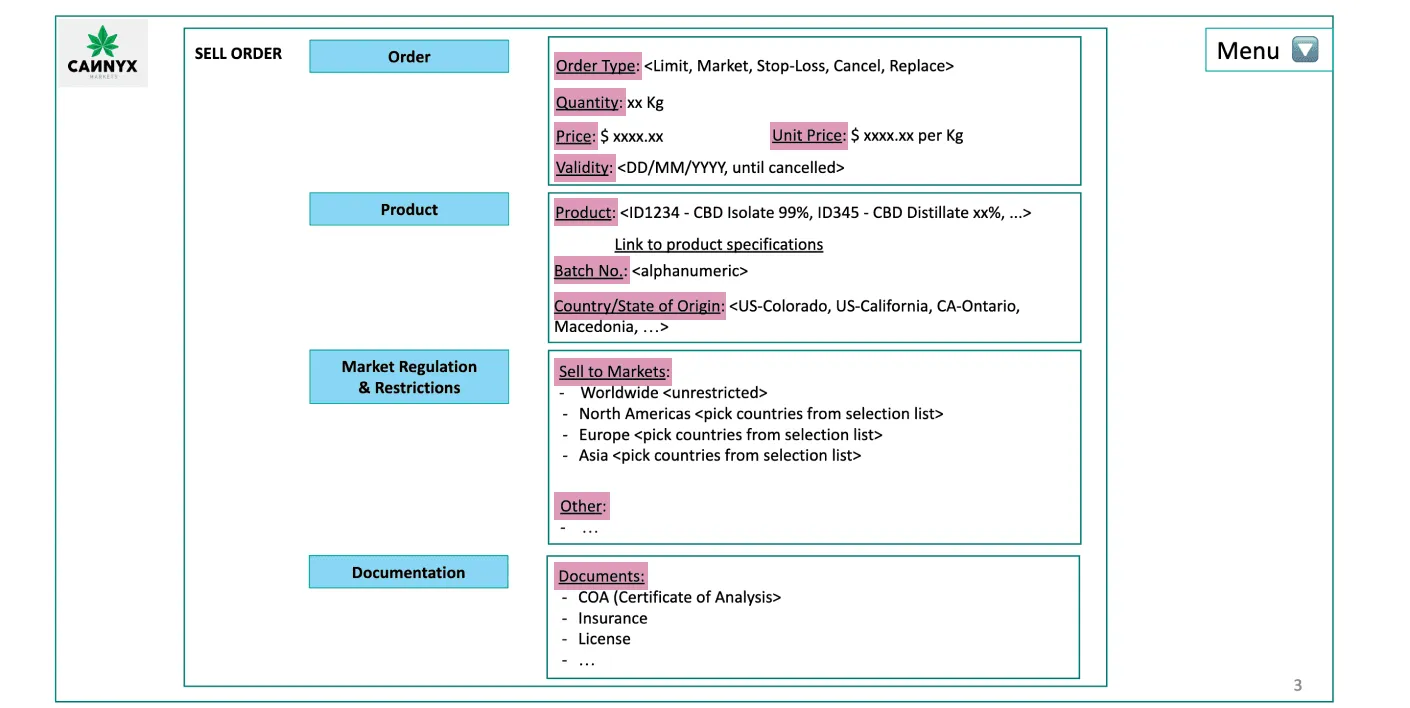
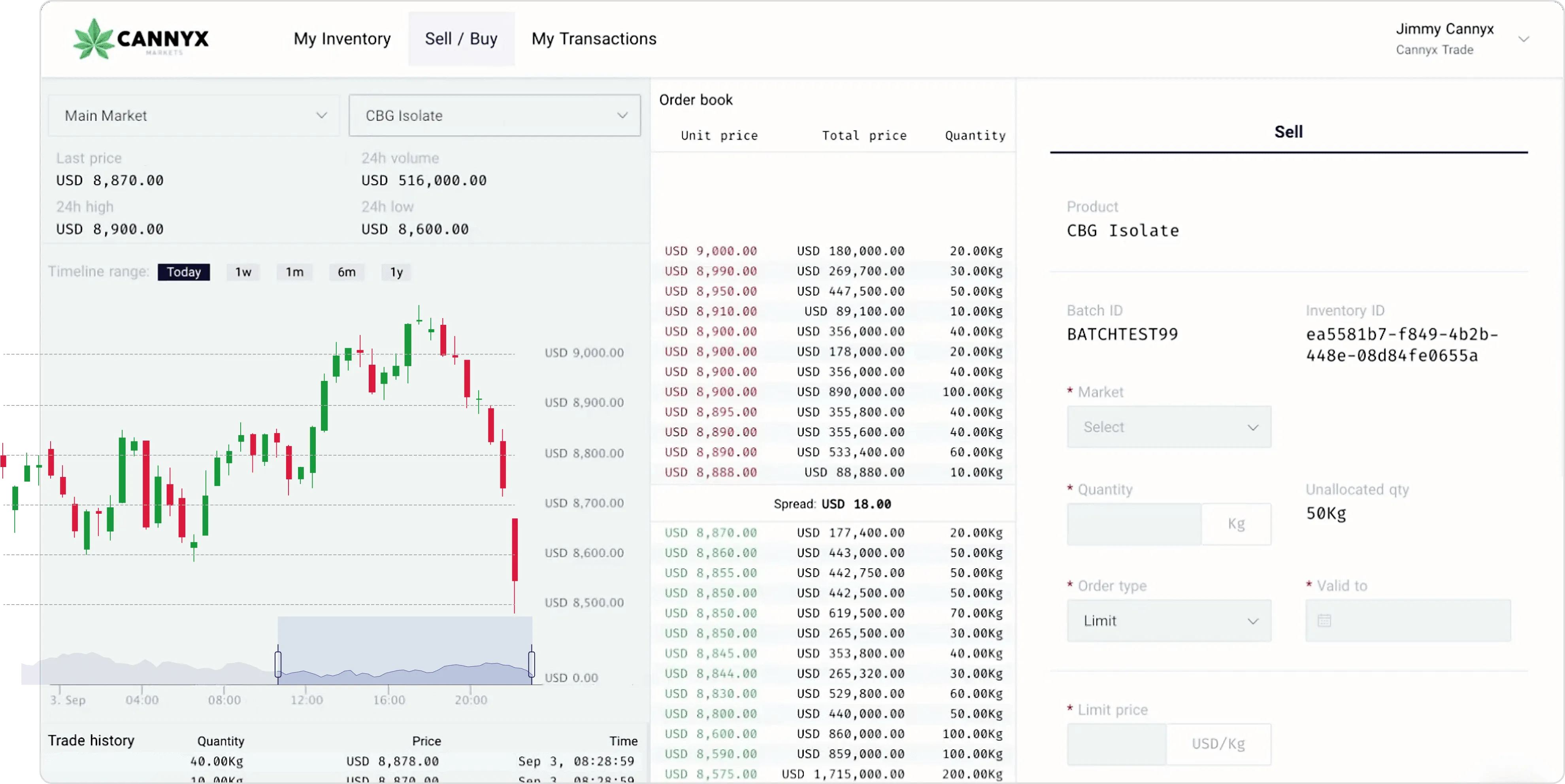
Transformed into data-havy UIs
Integrating all the requirements early in the discovery phase was critical in shaping both the data structure and smart contract logic before deployment.
Unlike regular software, mistakes in blockchain logic aren’t easily patched. They often require deploying a new contract or carefully migrating data to preserve integrity and audit trails.
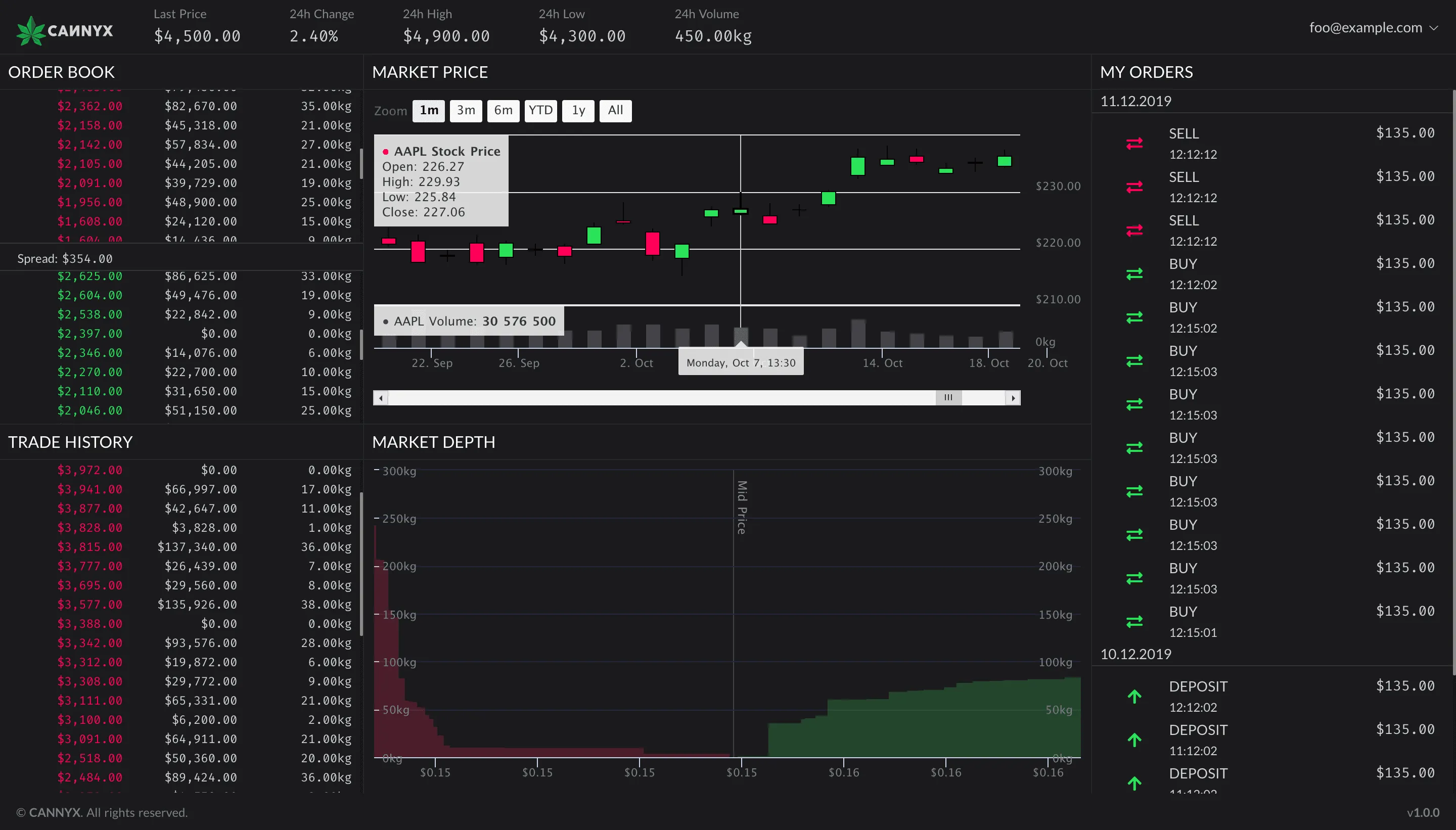
Examples of dark theme
Design
With a high volume of data and fast-paced transactions, the next challenge was to create an interface that felt powerful yet approachable. We applied best practices to build information-rich dashboards, pairing interactive charts and listings with a layout that made it easy to scan, search, and take quick action, whether buying, selling, or tracking assets.
The interface adapted seamlessly across desktop, tablet, mobile, prioritizing key actions and simplifying layouts where needed. Finally, both light and dark themes were incorporated to ensure visual comfort across varied environments using color agnostic design tokens.
The project demonstrated the versatility of the solution. A modified version of the application was deployed as a PoC for Jaguar Land Rover R&D, exploring the potential of blockchain technology for Just-in-Time (JIT) Inventory Management, helping with disputes and building a more resilient supply chain.
 Marian Hires Chief of Sales & Partnering
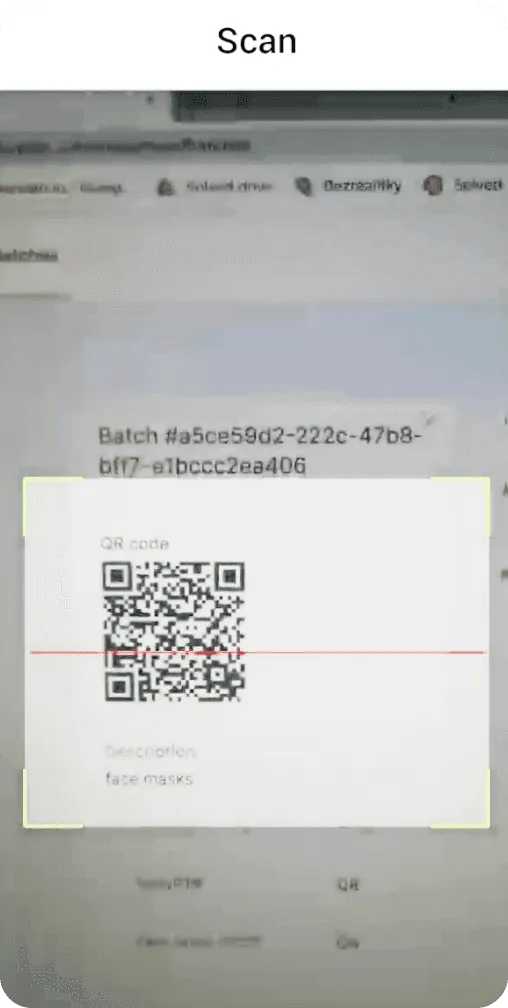
Field Tested Track‑n‑Trace PWA, for conditions like sun glare, wetness, gloves, or poor signal.
Complexity
Community-driven and Object-Oriented UX helped break down a highly complex system into manageable, structured components, making it efficient to design a consistent, information-rich platform.
Blockchain
A key challenge was identifying which parts of the user journey should be integrated into the blockchain to balance efficiency, scalability, and user-friendliness.
Compliance
Designing within the constraints of cannabinoid market regulations in the USA and EU was essential to ensuring the platform could legally operate across multiple jurisdictions.